


Divergence without divorce









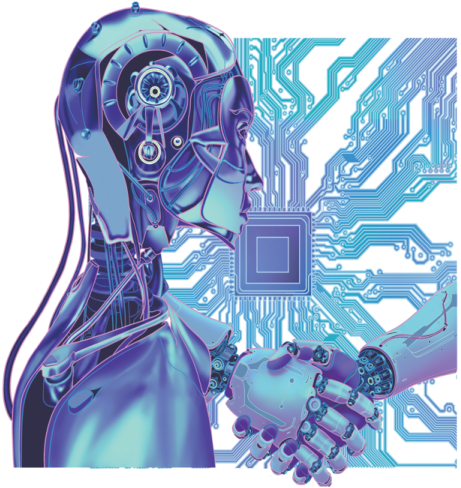
The US should chart a balanced US-China AI course as its hard-line decoupling strategy is fragmenting global research ecosystems
On Aug 12, the United States set a precedent — requiring Nvidia and AMD to hand over 15 percent of their China-bound artificial intelligence chip revenues as a condition for export licenses — a policy heavily biased toward revenue rather than risk mitigation. Yet even amid this shift toward unilateral pressure, China unveiled a global action plan for AI at the World Artificial Intelligence Conference in Shanghai, proposing a new global cooperation body to steer AI development.
These developments illustrate that, despite the escalating tensions, the US and China are not hurtling toward a clean technological divorce. Instead, the AI landscape is splintering unevenly. The US and China are drifting apart at the research frontier and in governance philosophies, while still converging in areas where interoperability and shared standards remain indispensable.
China's approach to AI is best understood as a dual-track strategy. On the one hand, Chinese enterprises continue to push technological boundaries despite restrictions on advanced semiconductors. A notable example emerged at the World AI Conference, with Huawei unveiling its CloudMatrix 384 supernode — a system integrating hundreds of its Ascend accelerators. Its system-level design offsets chip-level limitations, delivering performance on par with Western alternatives. This underscores a key point: architectural innovation can mitigate the impact of US export controls.
On the other hand, China places equal emphasis on accessibility and cost efficiency. Models such as Alibaba's Qwen 3 series and DeepSeek R1 — reportedly trained at a cost of $5 million to $6 million — exemplify a paradigm of affordable scalability. By 2024, Alibaba Cloud had deployed Qwen across over 10,000 enterprises in Asia, Africa and Latin America, underpinning applications in e-commerce, logistics and public-sector digitization. The contrast is striking: while the US maintains leadership at the research frontier, China is securing a foothold in the world's growth markets through practical, deployable AI solutions.
This dual-track approach is reinforced by China's broader engagement with the Global South. Through initiatives such as the Digital Silk Road, it has made heavy investments in digital infrastructure — encompassing fiber-optic networks, hardware, surveillance systems and AI-driven public-sector tools. Taken together, these efforts afford China influence that extends beyond chip capabilities alone. It is building an ecosystem — a comprehensive one comprising affordable AI tools, physical infrastructure and governance norms that resonate with the Global South.
The US, by contrast, retains undeniable strengths. It leads in foundational research, high-end semiconductor fabrication, and has a private-sector innovation ecosystem that produces global benchmarks such as OpenAI's GPT series and Nvidia's GPU dominance. Yet Washington's strategy increasingly leans on defensive instruments, above all export controls.
The latest example — the Nvidia/AMD revenue-share arrangement, requiring companies to remit around 15 percent of China-related AI chip sales to the US government in exchange for license approvals — slows China's access to high-end hardware, capture rents and maintain control. But such measures risk creating perverse incentives. They push companies to optimize for bureaucratic compliance rather than innovation, and they accelerate China's drive for indigenous substitutes.
Such indiscriminate restrictions jeopardize global scientific collaboration. Recent bibliometric evidence shows that while both countries gain from cross-border research, the US produces its most impactful AI work when collaborating with China. By contrast, China's highest-impact collaborations are with India, the Republic of Korea, Australia, the United Kingdom, Canada and France; partnerships with the US rank below these. In practical terms, policies that chill US-China collaboration penalize the US more — cutting it off from its most powerful research partner — while China can still lean on several high-performing alternatives. As China is responsible for about 24 percent of the world's most-cited AI research, excluding its contributions not only weakens US competitiveness but also slows global advances in critical fields such as climate, health and pandemic response.
In short, by overplaying sanctions, the US risks undermining its own innovation edge, constraining access to global talent, research networks and markets that are essential for technological leadership.
A hard-line US decoupling strategy risks fragmenting global research ecosystems. In 2022, roughly 40 percent of US science and engineering publications involved international collaboration, underscoring the US reliance on cross-border research networks. The decoupling strategy has had broad negative consequences on US companies. Nvidia projected in late 2022 that restrictions could cost it up to $400 million per quarter in lost sales. Moreover, by limiting access to widely used US frameworks such as TensorFlow and PyTorch in restricted markets, Washington risks pushing developers toward alternative ecosystems, reducing interoperability and creating global trust deficits in domains such as health diagnostics or climate modeling where shared standards are essential. The outcome would be lose-lose: a world of parallel AI stacks with shrinking bridges between them, undermining both innovation and safety.
The path forward in the US-China AI competition is neither na?ve openness nor blanket decoupling, but selective safeguards combined with managed interdependence. Both countries are advancing rapidly. The US leads in foundational research, high-end semiconductor fabrication and private-sector innovation, while China excels at scaling AI deployment, building accessible models and embedding its technologies in global infrastructure. As Ryan Hass, director of the John L. Thornton China Center in Brookings, noted, US policymakers must quickly gain comfort with the fact that the US and China are going to be navigating the frontiers of AI side-by-side over the coming years.
First, both nations should establish clear red lines based on their core principles. For the US, this means protecting sensitive areas such as military AI and classified datasets to uphold national security. R. David Edelman, IPRI distinguished fellow at Massachusetts Institute of Technology, noted that talks on both "tracks" were animated by a mutual desire to affirm some baseline of stability precisely because AI has created a space without custom, where policy was driven by mutual interest.
Second, enforceable mechanisms should prioritize multilateral cooperation over unilateral restrictions. Transparent supply chains, third-party auditing and international standards can support this, drawing from US approaches to flexible, sector-specific governance and China's agile, iterative regulations that balance development with control. Effective oversight requires not only authority but also robust enforcement mechanisms and the cooperation of like-minded partners.
Third, preserving global cooperation is essential where mutual benefits align with both countries' principles. US AI research thrives on international networks, with significant co-authorship in publications, while China's Global AI Governance Initiative promotes shared norms for safety and ethical development. A recent RAND report argues that the emergence of artificial general intelligence makes US-China cooperation not optional but necessary. Both sides share an interest in reducing risks, avoiding miscalculation and managing threats that no country can contain alone.
The future of AI will not be defined by total convergence or complete decoupling, but by selective safeguards and managed interdependence. As Jeffrey Ding, an assistant professor of political science at George Washington University, observes, technological revolutions are marathons, not sprints. For the US and China, the real test is whether they can compete responsibly while cooperating where global stability and safety demand it.
Chen Dingding is a professor of international relations at Jinan University, Guangzhou, and president of the Intellisia Institute. Chen Yingfan is a research fellow at the Intellisia Institute. The authors contributed this article to China Watch, a think tank powered by China Daily. The views do not necessarily reflect those of China Daily.
Contact the editor at editor@chinawatch.cn.